
Next-generation scans now helping patients at Royal Brompton
Tuesday 30 June 2026
A step forward in care at Royal Brompton Hospital
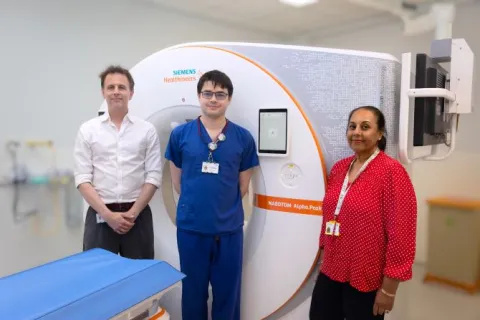
Patients at Royal Brompton Hospital can now benefit from a new type of CT scan that gives clearer, more detailed images of the heart and lungs.
The scanner, called the NAEOTOM Alpha Peak Photon Counting CT (PCCT) and developed by Siemens Healthineers, represents the next generation of imaging technology. It's been installed through a national research award in partnership with King’s College London, as part of ongoing work to improve diagnosis and care for people with complex heart and lung conditions.
What this means for you
If you're referred for a CT scan, this new technology could make a real difference to your experience.
Because the images are much clearer, doctors can often get the information they need from a single scan. This means you may be less likely to need further tests or repeat visits to hospital. It can also help your clinical team make decisions about your care more quickly, giving you answers and reassurance sooner.
A clearer picture of your health
Photon Counting CT, often shortened to PCCT, works differently from standard CT scanners. It can capture much more detailed information about the body, including subtle differences in tissues and structures.
In practice, this means doctors can see the heart and lungs in greater detail than before. Tiny structures are easier to identify and areas that might previously have been unclear can now be understood more confidently. Importantly, this can be done using the same, or in some cases lower, levels of radiation as traditional CT scans.
Helping people with complex conditions
This level of detail is especially important for people with more complex heart conditions.
For example, the scanner can give clearer images of coronary arteries that have become hardened or narrowed and it can show how well stents or other implanted devices are working. In situations where standard scans might leave some uncertainty, this technology can provide a more complete picture, helping healthcare professionals plan the right care first time.
Supporting research that benefits patients
Alongside improving day-to-day care, the scanner will play a key role in research.
Teams from Royal Brompton Hospital, Guy’s and St Thomas’, and King’s College London will use the Photon Counting CT scanner to explore new ways of diagnosing and monitoring heart and lung disease. The aim is to turn research findings into real improvements in patient care as quickly as possible.
Some scanning time is set aside specifically for research, helping new ideas and approaches move from the lab into everyday clinical practice.
A shared effort to improve care
This work brings together clinicians, researchers and scientists from across hospitals and universities, all focused on improving outcomes for patients.
By combining advanced technology with specialist expertise, we're giving patients more accurate diagnoses, a smoother experience, and greater confidence in their care.
Last updated: June 2026


