
Overview
Flexion wrapping for better finger bending
Flexion wrapping can help you to bend your fingers better when they are stiff. This information tells you about flexion wrapping and shows you how to do it.
The aim of flexion wrapping is to help increase the movement in your fingers. You can put the wrapping on a finger or a whole hand.
This information covers:
- how to put on the wrap
- safety matters
- the arrangements for your follow-up appointments
- how to help yourself if you have a hand injury or condition
How to put on the wrap
Before you start, warm up your hand in warm water, or use a hot water bottle or heat pack for 5 minutes.
When putting on the bandage, make sure that it is not too tight and that it feels comfortable.
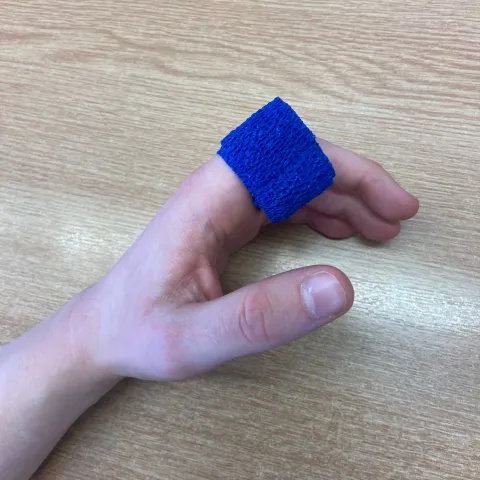
Instructions to put the bandage on a single finger
- Wrap the bandage on the tip of your finger.
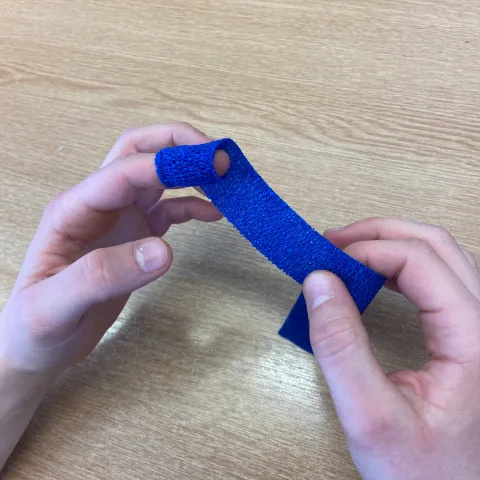
- Bend your finger as much as you can. Pull the bandage slightly to tighten it and then wrap the bandage around the back of the finger.
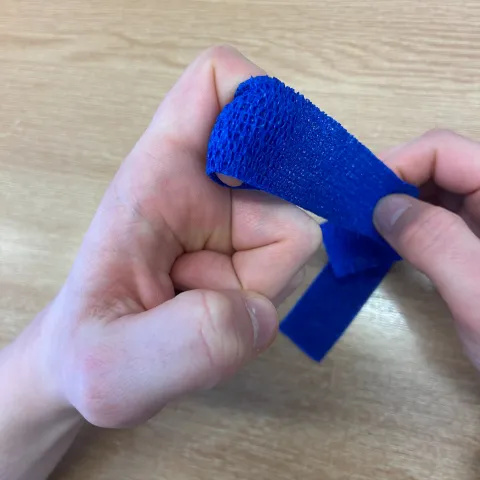
3. Wrap the bandage to get your finger in the best possible "hook" position.
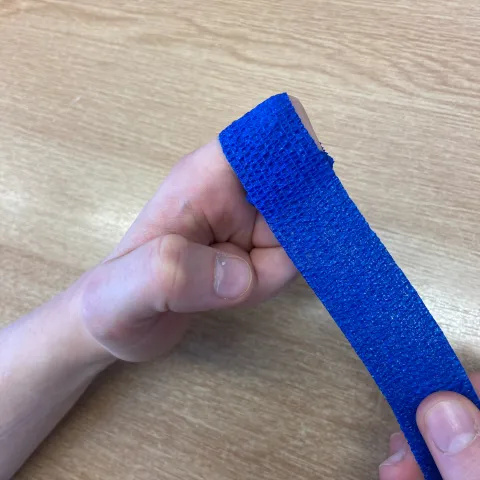
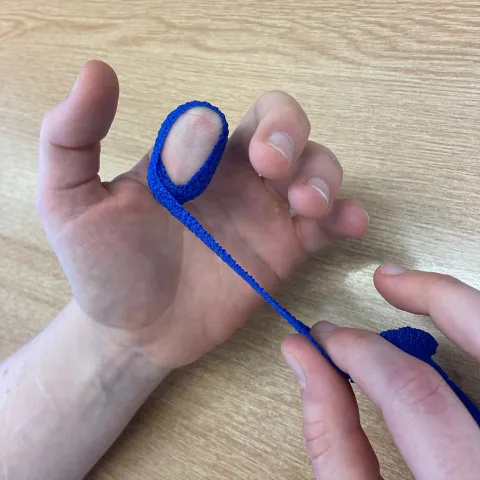
4. You can wrap the bandage around your finger a few times.
Instructions to put the bandage on your whole hand
1. Wrap the bandage around your wrist. This does not need to be tight.
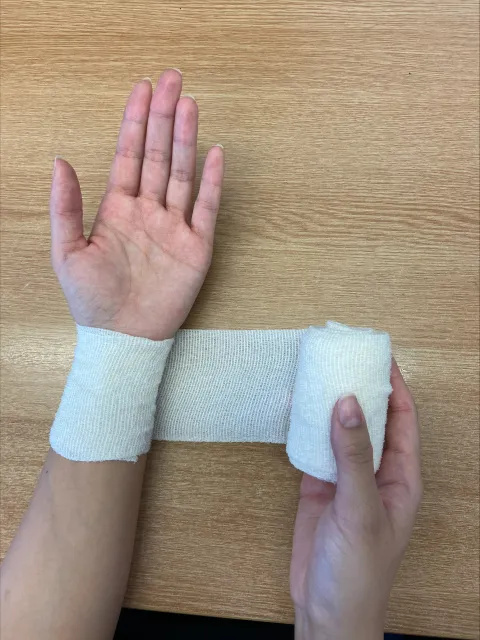
2. Bend your fingers as much as possible to make a fist. Bring the bandage up behind your hand and over the fingers, pulling your fingers down to your palm.
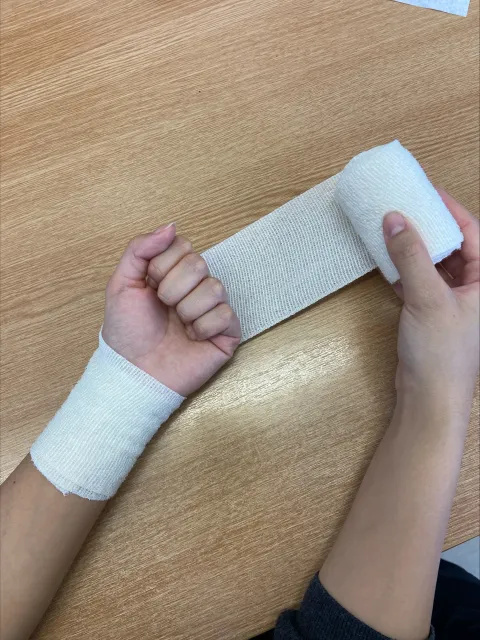
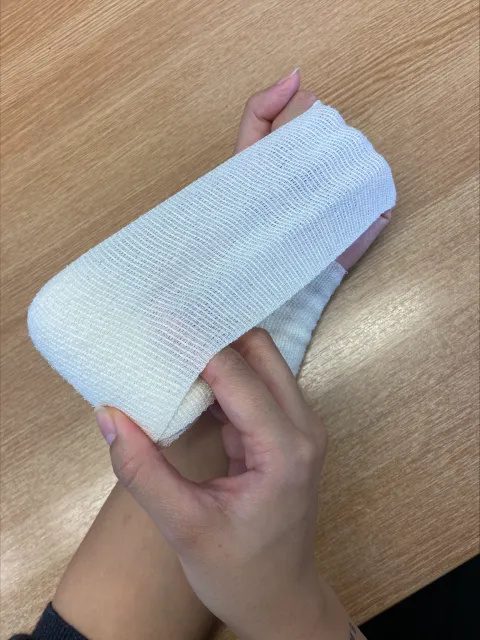
3. Wrap the bandage around your wrist to secure it before bringing it back up over your fingers.
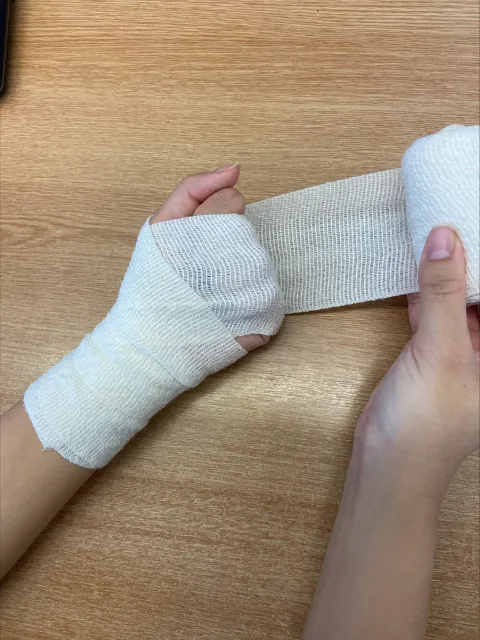
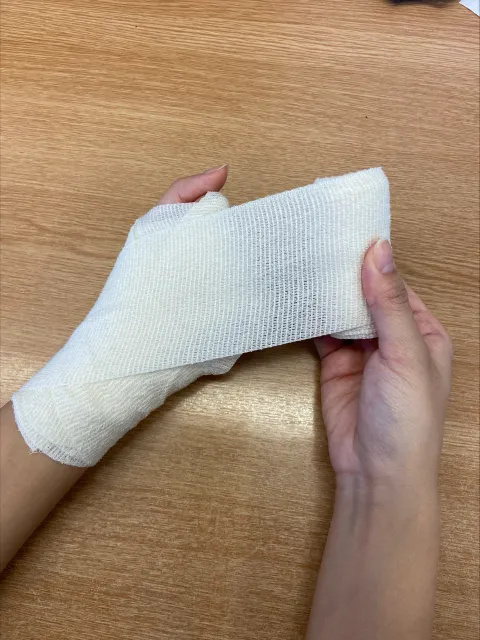
4. Wrap the bandage up and over all 4 fingers a couple of times to feel a stretch.
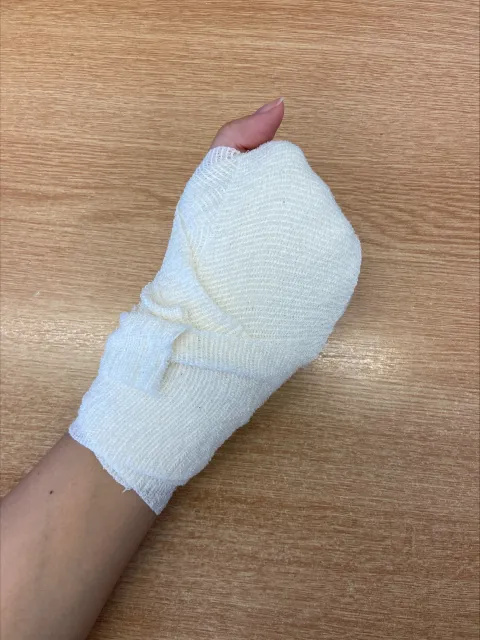
Your hand therapist will explain how long to wear the bandage.
You can reuse the bandage time and time again. Try rolling the bandage back to its original form for ease of use next time.
Safety matters
Important safety reminder
Do not put on the bandage too tightly. If the tip of your finger changes colour or feels cold or hot, remove the wrapping. Throbbing, discomfort or a tingling feeling means that the wrapping is too tight.
If the bandage is too tight, this could reduce the blood flow to your hand or fingers. To check the blood flow, squeeze the part of the finger that you can see. The colour should go lighter and then return to it is usual colour within 3 seconds.
Follow-up appointments
If you have a smart phone, you can download our MyChart patient app. This app lets you cancel or change hospital appointments.
Your hand therapist will talk to you about your follow-up appointments, and explain how often you may need them. Some injuries or conditions involve more follow-up appointments than others.
You need to book your next appointment before you leave the hand therapy department, unless:
- it is a video appointment
- your hand therapist has told you something different
- your appointment has already been arranged
Things you can do to help yourself
If you have a hand injury or condition, there are ways to help take care of yourself.
Talking therapies
Any injury to your hand or pain in the hand can be overwhelming, and affect your mental health.
If you are struggling with how you feel and need to talk to someone, you can get help from the NHS talking therapy services.
You can speak to your doctor about talking therapies or contact the service directly.
Stopping smoking
Smoking and vaping can delay your healing and affect your recovery, especially if you have a wound. Free services are available to help you stop smoking.
Living well
If you need to wait for hand surgery, there are things that you can do to get ready. The healthier that you are before surgery, the quicker your recovery is likely to be. Healthy living can also help you after your surgery.
Even if you have had your hand injury or condition for a while, a healthy lifestyle can help with your recovery.
We have information about keeping well before surgery. You can also read about diet, exercise, sleep and other healthy living topics on the NHS live well pages.
Resource number: 5212/VER2
Last reviewed: January 2026
Next review: January 2029

