
Overview
Volar plate injuries to the finger
A volar plate is a strong, thick ligament (band of tissue) that joins 2 bones together. The volar plate supports the joint and stops it overextending (hyperextension).
The collateral ligaments are ligaments on both sides of your joint. They stop your finger bending sideways.
This information covers:
- the signs and symptoms of volar plate injuries
- how volar plate injuries are diagnosed
- the possible treatments for volar plate injuries
- what happens if you do not get treatment
- what initial exercises you should do
- when you can return to your usual activities, work and sports
- the arrangements for your follow-up appointments
- how to help yourself if you have a hand injury or condition
Signs and symptoms of volar plate injuries
The signs and symptoms of volar plate injuries to the finger are:
- pain
- swelling
- loss of joint movement
- in some cases, bruising
Diagnosing volar plate injuries
You might need an X-ray to check if the bone in your finger is broken.
A doctor or hand specialist also looks at your injury to see if the ligament is fully torn, partly torn or just sprained.
Treatments available
In most cases, you do not need surgery if you have a volar plate injury. We make you a thermoplastic splint (thermoplastic is a type of plastic material that becomes soft when heated and hard when cooled). This splint is intended to:
- prevent the joint from hyperextending (when the joint overextends)
- rest the ligament in a position to help with healing
Not having treatment
If you do not wear the splint, your finger and the ligament may not heal properly. This could make your finger:
- become weak
- look different
- not move properly
- hurt when you use it
These changes could be long term.
It is important that you wear the splint and follow the advice that your hand therapist gives you.
Initial exercises
There are exercises that can help. Your hand therapist explains how many times to do each exercise a day.
Make sure that you keep your uninjured fingers and thumb moving freely. You can continue to use your hand for light activities while wearing the splint.
- Undo the top 2 straps of the splint. Use your other hand to bend the injured finger in towards your palm as far as your pain allows.
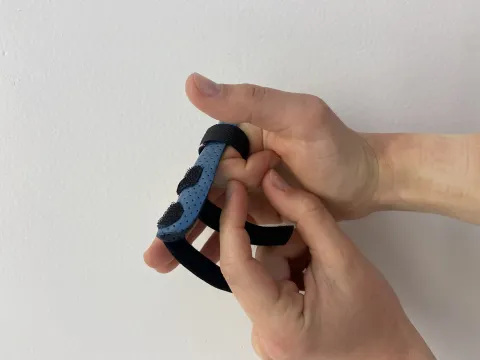
2. Undo the top strap of the splint. Block your finger just below the crease of the tip with your other hand. Bend the tip of the finger.
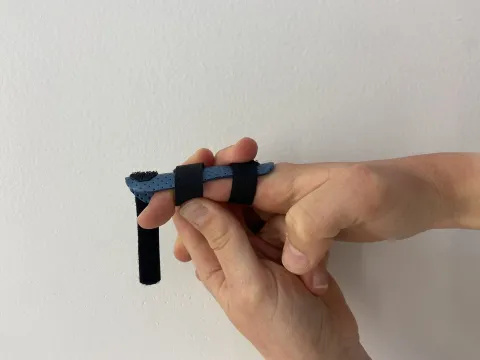
3. Undo the top 2 straps of the splint. Make a "hook" position with your finger.
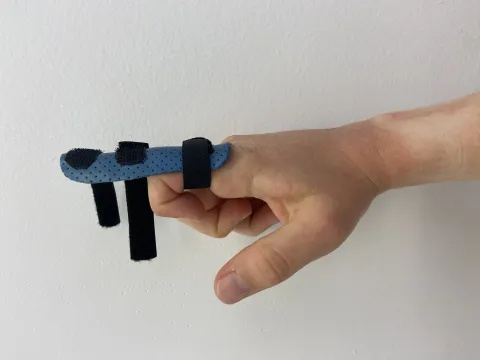
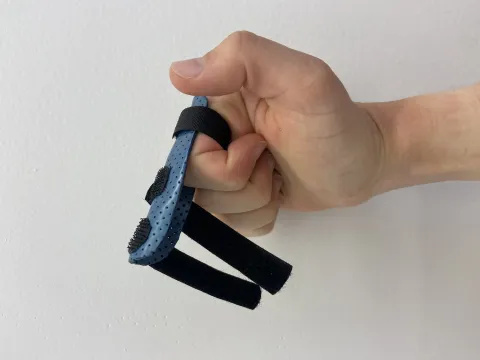
4. Undo the top 2 straps of the splint. Bend your finger into a fist.
Returning to usual activities, work and sports
Volar plate injuries can take 6 to 12 weeks to heal. Your hand therapist will explain:
- what activities are safe to do
- when you can start doing them again
Follow-up appointments
You can have a few follow-up appointments after starting hand therapy. This helps us to:
- see how your injury is healing
- give you guidance about what to do next
You may only need 2 or 3 follow-up appointments.
If you have a smart phone, you can download our MyChart patient app. This app lets you cancel or change hospital appointments.
You need to book your next appointment before you leave the hand therapy department, unless:
- it is a video appointment
- your hand therapist has told you something different
Things you can do to help yourself
If you have a hand injury or condition, there are ways to help take care of yourself.
Talking therapies
Any injury to your hand or pain in the hand can be overwhelming and affect your mental health.
If you are struggling with how you feel and need to talk to someone, you can get help from the NHS talking therapy services.
You can speak to your doctor about talking therapies or contact the service directly.
Stopping smoking
Smoking and vaping can delay your healing and affect your recovery, especially if you have a wound. Free services are available to help you stop smoking.
Living well
Even if you have had your hand injury or condition for a while, a healthy lifestyle can help with your recovery.
You can read about diet, exercise, sleep and other healthy living topics on the NHS live well pages.
Resource number: 3031/VER4
Last reviewed: February 2026
Next review: February 2029

